Monday, August 2, 2021

How Horticulture and Irrigation Techniques Can Prevent Water Damage and Conserve Water

 Michael & Son Water and Mold is committed to meeting client’s needs by providing the water damage restoration services that people need in moments of crisis. Strategies for avoiding a water damage disaster are welcome resources, especially when a homeowner has recently had to deal with a water damaged home. The team of professionals at Michael & Son Water and Mold is sharing tips on how to use horticulture and irrigation techniques to help homeowners avoid water damage and conserve water.

water damage restoration

Horticultural Strategies for Preventing Water Damage and Conserving Water

Xeriscaping is a landscaping method that utilizes water conserving techniques such as the use of drought tolerant plants, mulch, and efficient irrigation. In xeriscaping, special care is taken to avoid losing water to evaporation and run-off. The specific plants used in xeriscaping depend upon the climate. Xeriscaping differs from natural landscaping even though the plant selection may include some of the same plants. The driving principle in xeriscaping is the selection of plants for water conservation.

The seven principles listed below are the pillars of xeriscaping:

Principle #1: Intentional landscape planning and design

Xeriscaping focuses on water conservation and the prevention of run-off. Efficient grading techniques can channel run-off water to beds or capture the water in holding ponds for later use. Because native plants usually require less water, they are foundational to a water-conserving planting plan.

Principle #2: Limited lawn areas

Lawn areas are limited to appropriate, functional spaces. Grass can also be planted in low areas to avoid soil erosion and to hold the water in place. Preventing the water from pooling at the foundation of the home can prevent flooding in the crawl space and basement.

Principle #3: Water efficient plant selection

These plants may be dwarf versions of more familiar varieties. Plants that have broader or deeper root systems can withstand longer periods of dryness. Some plants store onboard water in tubers. The root systems sustain the plants in periods of drought while also holding the soil in place during a heavy downpour.

Principle #4: Efficient irrigation strategies

Efficient irrigation methods reduce evaporation, run-off, and overwatering. Drip irrigation concealed under mulch targets specific plants while the mulch discourages evaporation and run-off. Timers ensure that the water is delivered at optimal times and in prescribed amounts. Moisture sensors can be deployed to communicate with the irrigation system in order to prevent waste while providing consistent and adequate saturation. Smart irrigation prevents overwatering, which can cause flooding and microbial growth issues around the foundation of a home.

Principle #5: Soil amendments that increase water retention

New water retention technologies have been developed that, when added to soil or potting mix, capture and store water until it can be used by nearby plants. One technique is to till rotted sawdust into bedding material so that the soil is enriched and retains more water.

Principle #6: Copious mulching

Mulching, as mentioned above, retains moisture and prevents water run-off and erosion while slowing down evaporation. The many different textures and colors of mulch can add interest to any landscape. Be sure to keep the mulch at least six inches below the siding of the home to prevent water intrusion, wood rot, and microbial growth.

Principle #7: Appropriate landscape maintenance

Keeping trees, bushes, shrubs, and plants trimmed and pruned reduces the demand for water. Removing weeds and unwanted vegetation from beds eliminates unnecessary competition for a limited amount of water. Refreshing mulch beds enhances water retention while inhibiting evaporation. Clean bed edges with well-defined trenches more effectively capture run-off water and channel it where it is needed.

Other Water Damage Prevention Tips

Listed below are three more strategies for preventing water damage through the use of landscaping techniques.

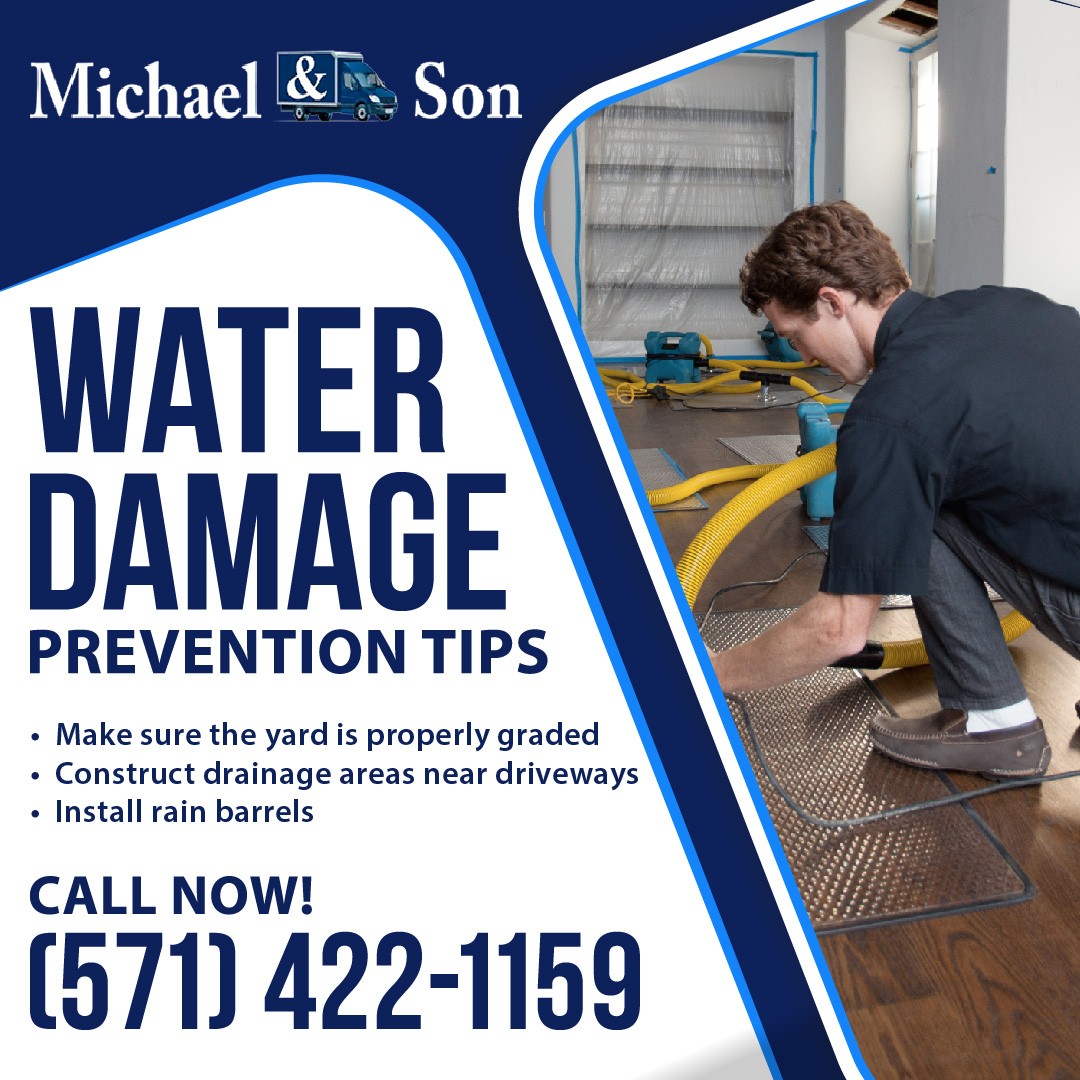
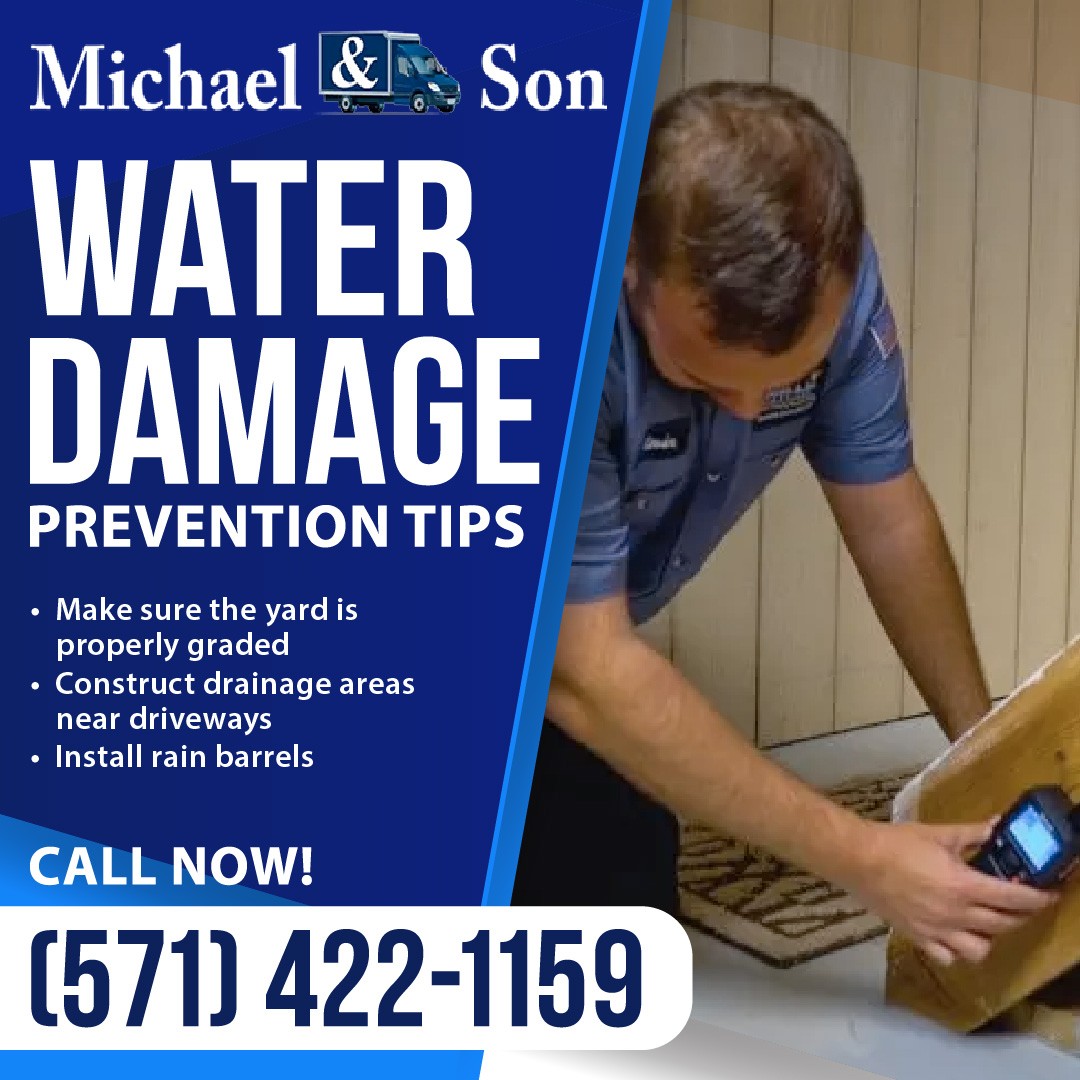
Tip #1: Make sure the yard is properly graded.

Prevent water from pooling next to the home’s foundation by correcting any grading issues that allow pooling. The grade should slope one inch per foot away from the foundation for at least six feet to ten feet. Keep gutters and downspouts cleaned out and maintained at all times.

Tip #2: Construct drainage areas near driveways.

Typical paved driveways can flood the garage and foundation of the home during heavy rains. Landscape solutions include the installation of a gravel driveway or a paved driveway designed to divert water. A more economical solution is to add drainage next to the driveway. Pavers or channel drains may take care of any problems.

Tip #3: Install rain barrels.

Place rain barrels at the bottom of downspouts to collect rainwater. The barrels are available in aesthetically attractive models and provide an eco-friendly way to water the vegetable garden.

water damage restoration

When a water damage disaster strikes, Michael & Son’s certified restoration and water removal technicians are available to provide 24/7 emergency service. Michael & Son Water and Mold works directly with the insurance company. Services include fire and smoke restoration, water extraction and flood restoration, sewage cleanup, mold remediation, and crawlspace encapsulation. For more information about the Alexandria, VA, water damage restoration company, contact Michael & Son Water and Mold by phone at (571) 422-1159.
Michael & Son Water and Mold 2-01.jpgMichael & Son Water and Mold 1-01.jpg

Contact Information:

Michael & Son Water and Mold

5740 General Washington Dr Ste WM
Alexandria, VA 22312
United States

TJ Simmons
(571) 422-1159
https://michaelandson.com/alexandria/restoration/water-damage

How Horticulture and Irrigation Techniques Can Prevent Water Damage and Conserve Water


Tuesday, June 29, 2021

Six Spring Cleaning Tips to Help Homeowners Prevent Water Damage

Alexandria, United States - /Michael & Son Water and Mold/

As warm weather and sunny days herald the arrival of spring and summer, the last thing that homeowners want to think about is water damage repair. However, during the season of spring cleaning, homeowners have the opportunity to address potential issues that could lead to water damage in their homes.

According to water damage statistics compiled by IPropertyManagement.com, 14,000 Americans per day are faced with a water damage disaster. If homeowners can prevent water damage before it occurs, they can avoid an expensive and stressful water damage disaster in the future. Michael & Son Water and Mold, a water damage restoration company serving Alexandria, VA, is sharing six tips that people can add to their spring cleaning checklist in order to preemptively address potential water damage problems.

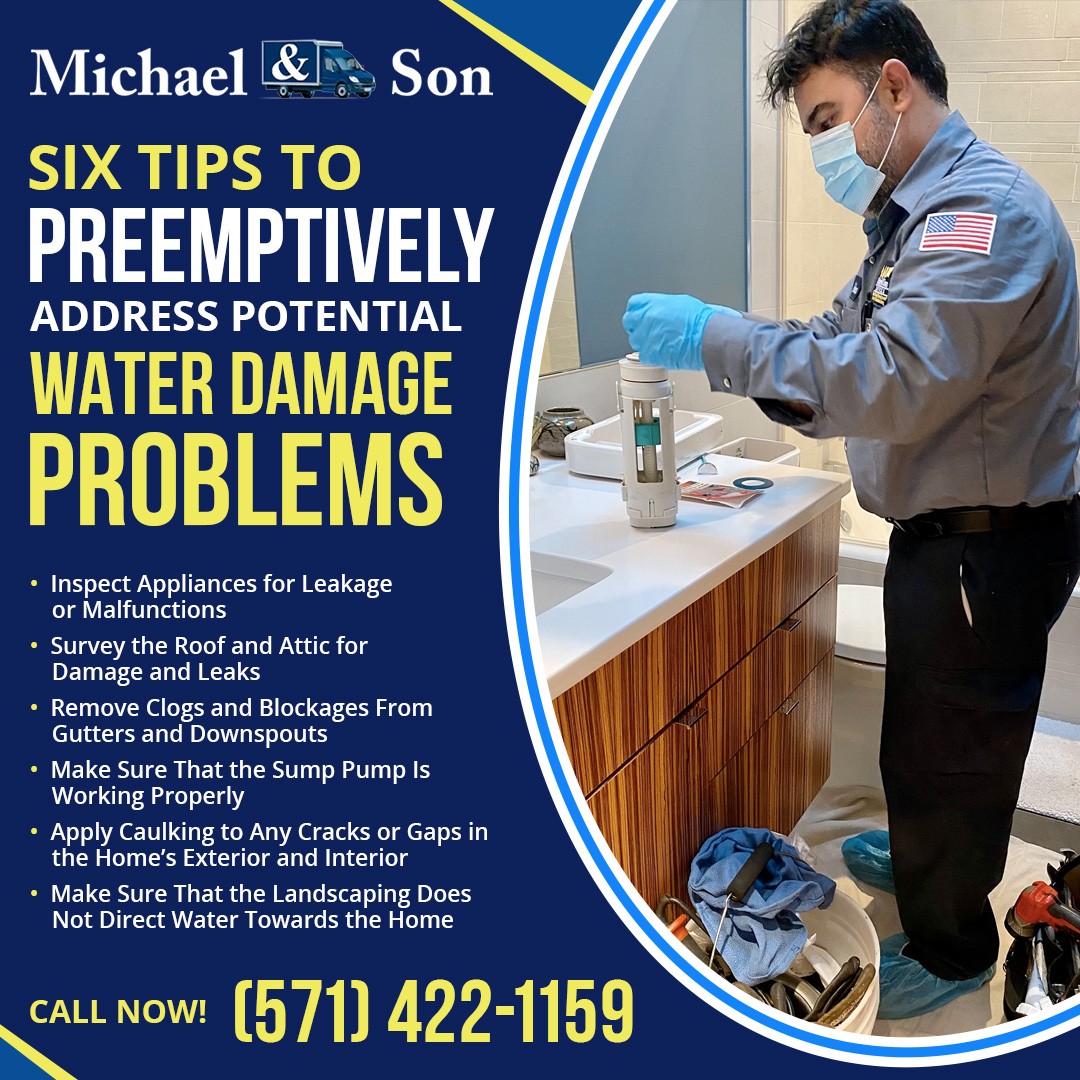
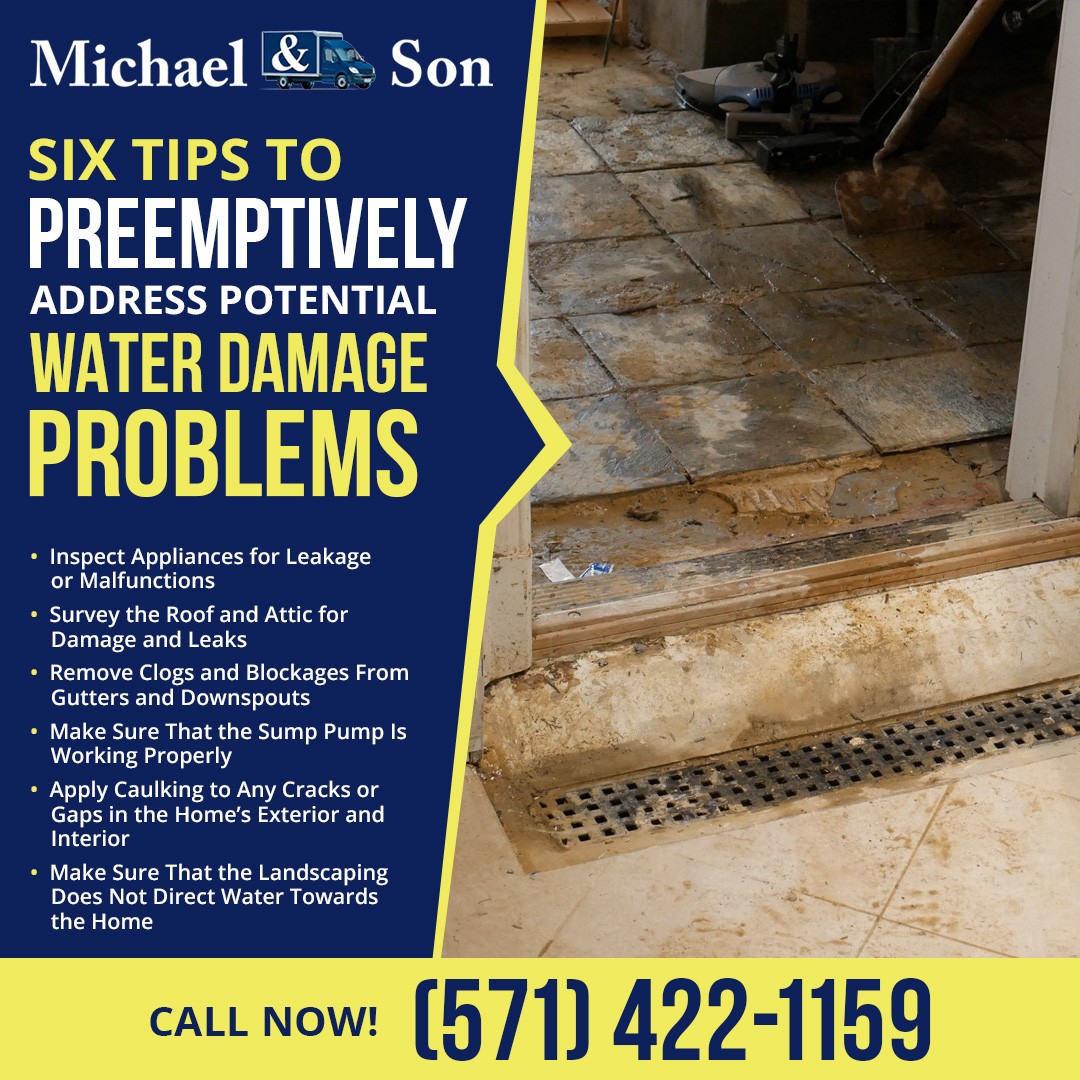
Tip #1: Inspect Appliances for Leakage or Malfunctions

Leaking appliances are a leading cause of water damage in residential settings. Dishwashers, refrigerators, and washing machines are water damage disasters waiting to happen, so it is essential to regularly inspect these appliances to ensure that they are functioning correctly and have not been damaged. Follow the checklist below:

  • Look for signs of small leaks that might usually go unnoticed
  • Review the appliance manual to make sure the appliance is operating properly
  • Replace defective, cracked, or torn seals
  • Inspect all supply hoses
  • Make sure all valve connections are tight
  • Look into acquiring a leak detector
  • Inspect the dishwasher door gaskets
  • Consider upgrading to stainless steel cord instead of plastic supply tubing for water supply tubes to the washing machine

Tip #2: Survey the Roof and Attic for Damage and Leaks

Roof leaks are another top cause of water leaks. A leaking roof allows water intrusion to damage the ceiling, attic, and walls, causing wooden building materials to rot and mold growth to take hold.

The homeowner does not have to climb onto the roof to conduct an inspection. A camera, smartphone, binoculars, or even a drone can give the homeowner an adequate view of the roof’s condition. Also, if the home has an attic, look for any signs or smells of water damage or microbial growth.

Family Handyman, an online resource for DIY and home improvement projects, provides the following recommendation: “Look for missing shingles, metal pipes that are damaged or missing or anything that simply doesn’t look right. If you notice anything that needs closer inspection or repair, call a roofer.”

Tip #3: Remove Clogs and Blockages From Gutters and Downspouts

Gutters and downspouts help guide water away from the foundation of a house, preventing water from entering the structure or compromising the foundation. When these fixtures become clogged, the water build-up can rot away the wooden exterior near the eaves and create new avenues for water to seep into the home.

Use a ladder to reach the gutters but be careful not to damage them. Remove leaves, moss, debris, mildew, mold, or any other obstructions, then use a garden hose to flush the fixtures with water. Never use a pressure washer to clean gutters and downspouts since the high pressure and heat of this cleaning method can cause damage.

Tip #4: Make Sure That the Sump Pump Is Working Properly

Homes that have a basement often have a sump pump that automatically extracts water should the basement flood. Yearly testing and cleaning help ensure that the sump pump is in good working order and will be able to do its job in the event of basement flooding.

Tip #5: Apply Caulking to Any Cracks or Gaps in the Home’s Exterior and Interior

Gaps and cracks are invitations for water to intrude into a home. Inspect the house for cracks and pay special attention to the joints and frames of windows. Use the appropriate caulk to seal the area or, for cracks in masonry and concrete, use hydraulic cement.

Tip #6: Make Sure That the Landscaping Does Not Direct Water Towards the Home

Warmer temperatures make spring and summer a favorite time to plan and work on landscape projects. One landscape project that can prevent water damage involves adjusting the yard so that it directs water away from the home. While most properties have grading that slopes away from the house, some properties are not graded properly, which means that water can pool near the house and compromise the foundation. Solutions that are less intrusive than adjusting the grading include a French drain, an underground drainpipe, or a dry creek.

To learn more about Michael & Son’s water damage restoration services, contact the company by phone at (571) 422-1159.

Michael & Son Water and Mold 1.jpgMichael & Son Water and Mold 2.jpg

Contact Information:

Michael & Son Water and Mold

5740 General Washington Dr Ste WM
Alexandria, VA 22312
United States

TJ Simmons
(571) 422-1159
https://michaelandson.com/alexandria/restoration/water-damage

How to Avoid a Water Damage Disaster Involving the Dishwasher

Alexandria, United States - /Michael & Son Water and Mold/

Michael & Son Water and Mold has been serving the metropolitan area of Alexandria, Washington D.C., and Maryland for over thirty years, and the company provides water damage restoration along with a wide array of home services, including electrical, plumbing, HVAC, and more. When the Michael and Son technicians arrive on the scene to address a water damage disaster, they bring a support team that can meet and overcome any challenge. When a water damage disaster occurs that floods the entire kitchen, call Michael & Son Water and Mold.


The Dishwasher: A Time-Saving Appliance

The dishwasher makes life much easier and frees up time for more enjoyable activities. As far as home appliances go, the dishwasher is one of the most efficient appliances in the kitchen.

Dishwasher Facts

  • Washing dishes by hand may use as much as 27 gallons of water per load. Running the hot water tap for two minutes while hand washing dishes uses as much as or more hot water than an energy-efficient automatic dishwasher.
  • Standard ENERGY STAR-labeled dishwashers use 3.5 gallons or less per load as of 2013.
  • The average family washes 215 loads per year, and with each load of dishes washed, the dishwasher has the opportunity to flood the kitchen. Thankfully, dishwashers are reliable and often give several warning signs of pending trouble before leakage or appliance failure occurs.
  • To save water, always wash a full load of dishes and avoid pre-washing. Pre-washing wastes water and newer models of dishwashers can remove more food grime without the need for extra water.
  • A residential dishwasher generates water temperatures between 110 and 170 degrees Fahrenheit.
  • Highly efficient washing action and motors, as well as sensors that determine the water temperature needed to clean the dishes and the length of the wash cycle, have greatly reduced the dishwasher’s energy and water consumption. As a result, the dishwasher accounts for only about one percent of daily water consumption. 3,870 gallons of water are saved over the lifetime of the newest models.

How to Avoid a Dishwasher Water Damage Disaster

Modern dishwashers have an average lifespan of around six to ten years, but the homeowner should not become complacent. The researchers at Consumer Reports warn, “Survey data from our members’ experiences with more than 70,000 dishwashers reveals that about 30 percent of all newly purchased dishwashers are likely to develop problems or break within the first five years.”

The tips listed below will extend the life of the dishwasher while preventing a water damage disaster.

  1. Replace the door locking mechanism when it becomes loose or fails to lock the dishwasher door tightly.
  2. Replace the door gasket when the first signs of leakage appear.
  3. Regularly inspect the connections to the supply line and the drain.
  4. Replace the water level sensor if there is any indication that it is malfunctioning.
  5. Make sure the appliance is level.
  6. Visually inspect the tub for cracks, and feel the bottom of the tub for cracks, splits, and holes.
  7. Frequently look and feel for water on the floor at the front of the dishwasher.
  8. If possible, inspect the flooring under the dishwasher for signs of moisture, mold, and rot.
  9. Always use the correct type of dishwasher soap in an automatic dishwasher. Using standard dish detergent can create a foamy mess.
  10. Schedule an appointment with a plumbing expert from Michael & Son Water and Mold at the first hint of a plumbing issue with the dishwasher.

Dealing With Dishwasher Water Damage

When the dishwasher leaks or breaks, the best solution is to call in a water damage restoration expert to quickly extract the water, dry out damaged flooring, baseboards, and cabinets, and repair any structural damage so that life can return to normal.

A water damage disaster can create a hazardous environment for the homeowner, children, and pets if the water damage is not quickly, safely, and thoroughly mitigated. Here are six reasons to call in a professional water damage restoration company when water damage occurs in the home:

  1. Gray water spills can be toxic.
  2. Soapy water from the dishwasher can contribute to a slip-and-fall injury.
  3. Electrical shock may be a hazard if large amounts of water are involved.
  4. Extracting water that has seeped under the flooring requires special equipment and training.
  5. Leaving the water damage unattended will lead to advanced secondary structural damage and possibly a mold infestation.
  6. A quick response enables the homeowner to return to normal life and activities sooner rather than later.

Reliable Water Damage Restoration in Alexandria, VA

Michael & Son Water and Mold is a home services company specializing in property damage restoration, electrical services, plumbing, heating and air conditioning, and remodeling. The team’s wide-ranging expertise across the home services sector uniquely qualifies them to handle every aspect of property damage from the beginning to the end of the project. The company has been servicing the metropolitan area for over thirty years. Licensed, bonded, and insured, Michael & Son Water and Mold makes customer service the top priority.

For more information about water damage restoration in Alexandria, VA, contact Michael & Son Water and Mold by phone at (800) 948-6453.

MASWAM-April-2021-(1).pngMASWAM-April-2021-(2).png

Contact Information:

Michael & Son Water and Mold

5740 General Washington Dr Ste WM
Alexandria, VA 22312
United States

TJ Simmons
(571) 422-1159
https://michaelandson.com/alexandria/restoration/water-damage

How Horticulture and Irrigation Techniques Can Prevent Water Damage and Conserve Water

  Michael & Son Water and Mold is committed to meeting client’s needs by providing the  water damage restoration  services that people n...